 Food
Food Dairy & Poultry
 Beverage
 Home Care
 Beauty & Personal Care
 Health Care & Pharma
 Transport & Logistics
 Automobile
 Aviation
 Retail
 Exhibitions & Events
 Metal
Metal Garment
 Office Supplies
 Consumer Electronics

In the fast-paced worlds of transport, logistics, and heavy manufacturing, keeping track of your assets isn’t just about organization. Indeed, securing your equipment with heavy-duty metal tags is critical for safety, compliance, and your bottom line. However, what happens when the environment itself works against your tracking systems?
Standard paper, plastic, or vinyl labels might work well in a climate-controlled warehouse. Conversely, if you put them on a shipping container, a crane, or an industrial winch, they quickly fade, tear, or peel away. Consequently, when a label fails, you lose vital data that can disrupt your global supply chain operations.
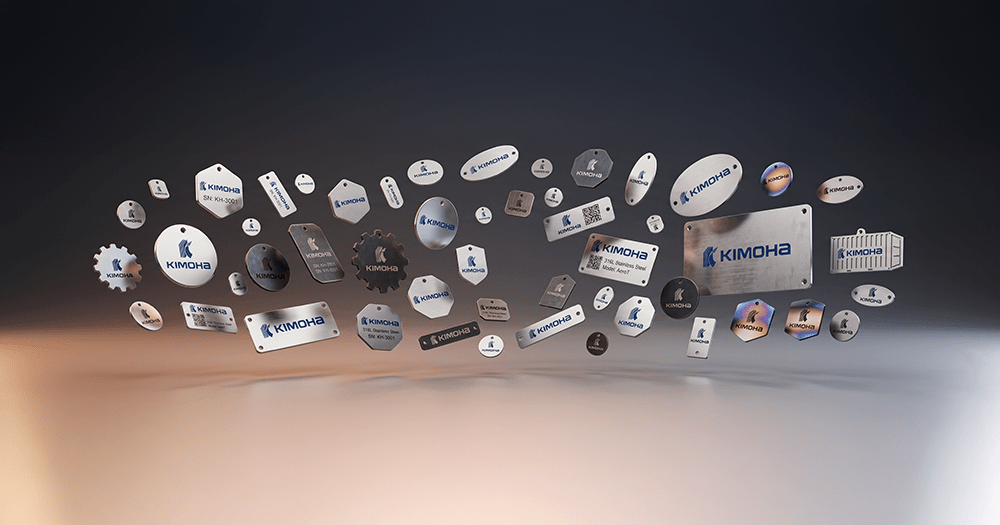
Therefore, the solution to extreme conditions is simple and robust: heavy-duty metal tags.
Why Heavy-Duty Metal Tags Survive Harsh Industrial Environments
Harsh environments subject heavy machinery and logistics equipment to conditions that destroy standard labeling in a matter of days. Specifically, your asset identification needs to survive:
-
Extreme Temperatures: From freezing shipping yards to the intense heat of engine rooms and foundries.
-
Severe Weather: Relentless UV exposure, heavy rain, saltwater spray, and high winds.
-
Physical Abrasion: Scrapes, impacts, and the daily wear-and-tear of heavy industrial use.
As a result, when environmental damage destroys traceability, companies face expensive downtime, lost inventory, and potential regulatory fines.
Why Metal Labels Are the Industry Standard
Top manufacturers engineer these durable solutions—typically from high-grade stainless steel, anodized aluminum, or brass—for absolute permanence. Here is why upgrading is a smart investment for your operation:
1. Uncompromising Durability
Unlike flexible labels that snag or scratch, metal plates remain rigid and take a beating. For instance, you can securely rivet, weld, or bolt them directly onto heavy iron components. Because of this secure attachment, they stay exactly where you put them for the entire lifespan of the asset.
2. Permanent Data Readability
A tag only holds value if you can easily read the information on it. Fortunately, industrial marking utilizes deep engraving, stamping, or specialized laser techniques. Consequently, serial numbers, barcodes, and QR codes remain highly readable, even if dirt or heavy grease covers the surface.
3. Tamper Resistance
In supply chain management, security remains paramount. Furthermore, rigid plates offer exceptional tamper resistance. Since installers fasten them mechanically to the equipment, unauthorized users cannot easily swap or alter them without leaving obvious signs of interference.
Essential Applications for Heavy-Duty Metal Tags
While these solutions offer versatility across the board, they prove absolutely essential in specific sectors:
-
Transport & Logistics: Identifying shipping containers, railcars, and fleet vehicles that face global weather conditions.
-
Heavy Machinery & Construction: Tracking excavators, cranes, and tools on rugged jobsites.
-
Oil & Gas: Labeling pipelines, valves, and offshore rig equipment that endure highly corrosive environments.
-
Manufacturing: Serializing heavy iron components and tracking assets through high-heat production cycles.
Secure Your Assets for the Long Haul
Your heavy equipment does demanding work. Therefore, it deserves asset identification that keeps up. Ultimately, investing in heavy-duty metal tags ensures that your critical data, serial numbers, and branding survive whatever the environment throws at them.
Whether you need perfectly etched QR codes for seamless digital scanning or rugged, riveted plates for industrial winches, upgrading provides the most reliable way to secure your assets.
Ready to upgrade your tracking? Explore Kimoha’s custom labeling solutions today.