 Food
Food Dairy & Poultry
 Beverage
 Home Care
 Beauty & Personal Care
 Health Care & Pharma
 Transport & Logistics
 Automobile
 Aviation
 Retail
 Exhibitions & Events
 Metal
Metal Garment
 Office Supplies
 Consumer Electronics

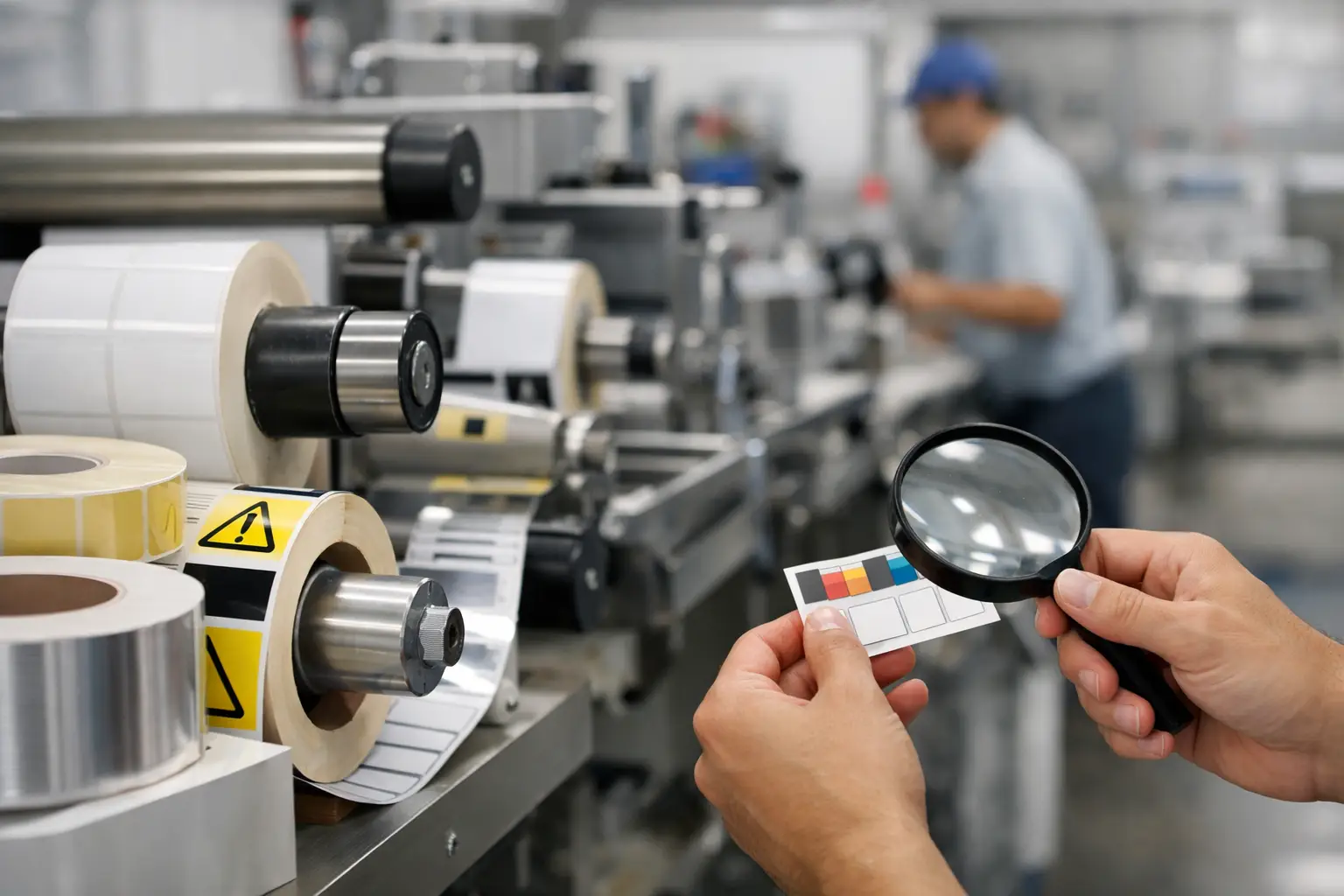
A missed scan at a warehouse gate, a smudged batch code on a pharmaceutical carton, or a tamper seal that fails too easily can create far bigger problems than a label defect. In regulated and high-volume environments, the right industrial label manufacturing company is not just supplying printed material. It is supporting traceability, compliance, product integrity, and operational continuity.
That distinction matters because labels now carry more responsibility than ever. They must perform across production lines, storage conditions, transport cycles, retail environments, and audit requirements. For procurement leaders, packaging teams, operations managers, and brand owners, the real evaluation is not whether a supplier can print a label. It is whether that supplier can engineer a labeling solution that holds up under commercial pressure.
What an industrial label manufacturing company actually delivers
A capable industrial label manufacturing company works at the intersection of print technology, materials science, compliance awareness, and application performance. The output may look simple on the surface, but the production variables are not. Adhesive selection, face stock, liner compatibility, print method, surface finish, data integration, and environmental resistance all influence whether a label will perform as intended.
In industrial use cases, labels often have to do several jobs at once. They may need to carry branding while also supporting barcode readability. They may require resistance to moisture, oil, abrasion, temperature swings, or chemical exposure. In some sectors, they must also deter tampering, reveal interference, or support authentication.
That is why experienced manufacturers do more than quote against a specification sheet. They assess end use. A label for a dairy container, an aviation tag, an RFID-enabled logistics identifier, and a hologram security label are all technically different products, even if they move through the same production plant.
Why sector knowledge changes the outcome
Not every labeling requirement is interchangeable. A food and beverage brand needs material and adhesive performance that can withstand cold chain conditions, condensation, and high-speed application. A pharmaceutical operation places stronger emphasis on variable data accuracy, lot traceability, and consistency across validation-sensitive workflows. An automotive or lubricant label may need to resist oil contact, rough handling, and long storage cycles.
This is where sector-specific manufacturing experience becomes commercially valuable. A supplier with direct knowledge of industry use cases can identify failure points before they become production issues. That includes selecting adhesives that bond correctly to difficult substrates, designing label constructions for curved or squeezable containers, and ensuring printed information stays legible throughout distribution.
For aviation and security applications, the bar is even higher. Tags and labels may need sequential tracking, durable attachment, and resistance to handling stress. Security labels, void stickers, and tamper-evident constructions must be designed for a clear visual response when interference occurs. In these environments, appearance matters, but function matters first.
Print capability is only part of the picture
Flexographic and digital printing each bring different strengths to industrial labeling. Flexographic printing is often preferred for high-volume runs where consistency, speed, and repeatability are essential. Digital printing is useful when shorter runs, version changes, variable data, or faster artwork transitions are required. In practice, many enterprise buyers benefit most from a manufacturer that can deploy both methods based on the application rather than forcing every job through one process.
The trade-off depends on the project. A large FMCG rollout may demand scale and cost-efficient repeat production. A compliance-driven label with multiple SKUs and frequent data changes may benefit from digital precision and flexibility. The strongest manufacturing partners understand when to standardize and when to customize.
Finishing also deserves attention. Lamination, varnishes, specialty coatings, die-cut accuracy, and ink performance all influence durability and presentation. A label that looks sharp on the roll but fails after exposure to refrigeration, friction, or sunlight is not production ready. Enterprise buyers should expect validation around performance, not just print samples.
Compliance, traceability, and operational fit
For many industries, labels are tied directly to compliance and audit readiness. Product identification, batch coding, barcodes, warning information, and handling instructions all depend on print accuracy and durability. If labels degrade too early, scan poorly, or detach in transit, the issue can move from packaging inconvenience to operational risk.
Traceability is another major factor. Barcode labels, RFID-enabled labels, and serialized formats support inventory control, warehouse movement, dispatch accuracy, and returns management. In fast-moving supply chains, these are not optional enhancements. They are part of how businesses maintain visibility and reduce avoidable friction.
A strong manufacturing partner will also consider application conditions. Labels have to dispense correctly, apply cleanly, and stay aligned with existing equipment and line speeds. This matters in high-volume production settings where even small inconsistencies can lead to downtime, rework, or waste. Good labels are engineered for the product, but great labels are engineered for the process as well.
Security labels are now a strategic requirement
Counterfeiting, unauthorized repacking, and product substitution are no longer niche concerns. They affect brand trust, channel integrity, and customer safety across multiple sectors. Security labeling has therefore moved from a specialist requirement to a broader business control measure.
An industrial label manufacturing company with security expertise can offer more than a visual deterrent. Hologram labels, tamper-evident labels, void stickers, and brand protection features help organizations detect interference and reinforce authenticity. The right choice depends on the risk profile. A retail-facing product may need overt features that reassure customers. A logistics or regulated-use item may benefit from covert or forensic elements that support internal verification.
The key is not to over-engineer or under-specify. Some products require a highly visible tamper response. Others need layered protection integrated into broader packaging controls. A knowledgeable supplier will guide that balance based on the product category, distribution model, and exposure to fraud.
What enterprise buyers should evaluate
When selecting an industrial label manufacturing company, technical capability should be reviewed alongside manufacturing discipline. Reliability is not just about producing a quality sample. It is about maintaining consistency across repeated runs, multiple SKUs, changing volumes, and demanding deadlines.
Buyers should look for evidence of material expertise, print process range, quality control maturity, and familiarity with industry-specific applications. They should also assess whether the supplier can support both branding goals and technical requirements. That balance is often overlooked. A label may need to create shelf impact while still delivering scannability, adhesion, and regulatory clarity.
It also helps to evaluate how the manufacturer handles complexity. Can they manage shrink sleeves for visual impact, pressure-sensitive labels for operational flexibility, RFID integration for supply chain efficiency, and specialized tags for aviation or logistics? Breadth alone is not the point. The real value is whether that breadth is backed by production control and application knowledge.
Established manufacturing history can be meaningful here. A company with decades of experience has typically worked through material shifts, print challenges, regulatory changes, and evolving customer demands. Kimoha, established in 1988, reflects that type of production maturity, particularly in segments where security, traceability, and industrial durability are non-negotiable.
The best label partner reduces risk before it appears
A label failure is rarely treated as a label problem once it reaches the market or the supply chain. It becomes a shipping issue, a compliance issue, a returns issue, or a brand issue. That is why the best manufacturing relationships are preventive by nature.
The right partner asks practical questions early. What surface is the label bonding to? What temperatures will it face? How fast is the line running? Does the code need to scan after abrasion? Is tamper evidence mandatory or advisable? Will the same construction be used across export markets, or does the specification need to vary by region? These details shape performance far more than artwork alone.
For enterprise buyers, the most useful mindset is to treat labels as functional components of the product and the process. When manufactured correctly, they support speed, control, compliance, security, and presentation all at once. That is not a minor procurement category. It is an operational advantage that becomes visible every time a product moves correctly, scans instantly, and reaches the customer exactly as intended.
A dependable label should do its job so well that nobody notices it. Getting there, however, starts with choosing a manufacturing partner that notices everything.