 Food
Food Dairy & Poultry
 Beverage
 Home Care
 Beauty & Personal Care
 Health Care & Pharma
 Transport & Logistics
 Automobile
 Aviation
 Retail
 Exhibitions & Events
 Metal
Metal Garment
 Office Supplies
 Consumer Electronics

A label that fails in the field is rarely just a label problem. It can delay shipments, disrupt scanning, weaken shelf presentation, or create compliance risk. That is why a common question in industrial packaging and product identification is simple but consequential: what is a pressure sensitive label?
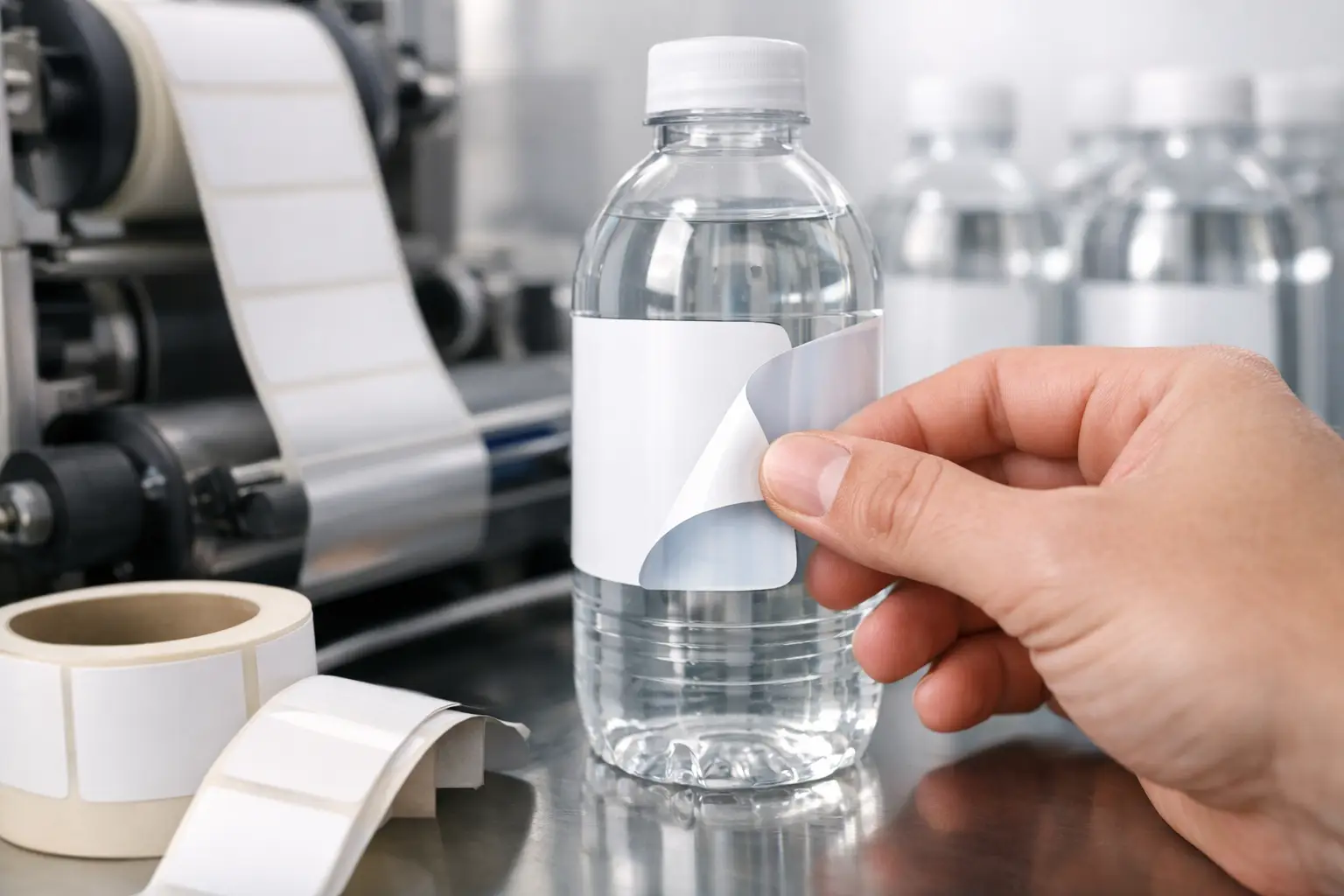
A pressure sensitive label is a self-adhesive label that bonds to a surface when pressure is applied. It does not require water, heat, or solvent to activate the adhesive. The construction typically includes a face stock, an adhesive layer, a release liner, and in many cases a topcoat or protective finish. Once applied to the intended surface, the label is expected to stay in place and perform under the conditions it was specified for.
That definition is straightforward. The real value lies in how these labels are engineered, selected, and used across demanding industries.
What is a pressure sensitive label made of?
At a technical level, a pressure sensitive label is a layered construction, not just a printed sticker. Each layer affects performance, printability, and application efficiency.
The face stock is the visible material that carries printed information, branding, barcodes, warnings, or variable data. It may be paper, film, foil, or a specialty material chosen for durability, appearance, or compliance needs. A premium consumer-facing product may use a decorative stock for shelf impact, while a logistics label may use a direct thermal or transfer-compatible material designed for speed and scan accuracy.
The adhesive sits beneath the face stock. This is the functional core of the label. It must create the right bond with the application surface, whether that surface is corrugated board, glass, metal, HDPE, PET, or a rough industrial substrate. Adhesives can be permanent, removable, repositionable, freezer-grade, high-tack, or formulated for specialty environments.
The release liner protects the adhesive before application. It allows the label to be dispensed manually or through automated labeling equipment. In high-volume operations, liner consistency matters because it directly affects dispensing speed, waste control, and line uptime.
Some constructions also include topcoats, laminates, or varnishes. These improve resistance to abrasion, moisture, chemicals, UV exposure, or handling damage. For regulated sectors, that extra protection can be the difference between a readable barcode and a failed inspection point.
How pressure sensitive labels work
The working principle is simple: pressure activates contact between the adhesive and the substrate. Once the label is pressed into place, the adhesive wets out onto the surface and begins forming a bond.
But performance depends on more than pressing a label down. Surface energy, cleanliness, texture, application temperature, dwell time, and environmental exposure all affect adhesion. A label that performs well on clean glass at room temperature may behave very differently on an oily automotive container or a cold pharmaceutical package.
This is where procurement and operations teams often run into avoidable problems. They may assume all self-adhesive labels behave the same. They do not. Material and adhesive selection must match the use case, not just the artwork or label size.
Where pressure sensitive labels are used
Pressure sensitive labels are used across nearly every industry because they are versatile, scalable, and compatible with both branding and functional identification.
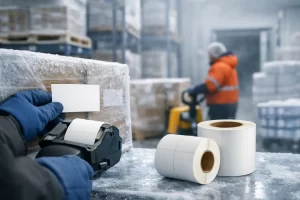
In FMCG and food packaging, they support shelf appeal, product information, batch coding, and promotional formats. In pharmaceuticals and healthcare, they help manage dosage information, traceability, tamper indication, and compliance requirements. In logistics and warehousing, they carry barcodes, routing data, inventory information, and shipping identifiers that must remain legible through handling and transit.
Industrial manufacturers use them on chemicals, lubricants, durable goods, and components where resistance to moisture, oils, or abrasion may be essential. Retailers rely on them for price marking and inventory control. Aviation and high-security environments use specialized constructions for tracking, authentication, and tamper evidence.
This broad applicability is one reason pressure sensitive labels remain a preferred format in B2B packaging systems. They can support high-speed production while still allowing customization for product variants, regulatory text, and variable data.
Why businesses choose pressure sensitive labels
The main advantage is operational efficiency. Pressure sensitive labels can be applied quickly by hand or by machine, which makes them suitable for both short runs and high-volume production. They also support excellent print quality, which matters when a label must do more than identify a package. It may also need to represent the brand, carry mandatory content, and scan consistently across the supply chain.
Another major benefit is design flexibility. These labels can be produced in different shapes, sizes, finishes, adhesives, and material combinations. That allows buyers to specify for appearance, durability, security, or application speed without changing the fundamental label format.
They also adapt well to complex product portfolios. A manufacturer with multiple SKUs, changing compliance data, or regional packaging variations can manage those needs with pressure sensitive labels more easily than with directly printed packaging in many cases.
That said, the best choice depends on the application. If a product faces extreme heat, aggressive chemicals, or unusual storage conditions, the label construction must be carefully engineered. Pressure sensitive labels are versatile, but they are not one-size-fits-all.
What is a pressure sensitive label compared to other label types?
The easiest comparison is with glue-applied labels. Traditional wet-glue labels require adhesive to be applied during the labeling process. Pressure sensitive labels arrive with adhesive already built into the construction, protected by a liner until use. That simplifies application and often improves consistency.
They are also different from shrink sleeves. A shrink sleeve conforms around a container using heat, offering 360-degree decoration and tamper options. Pressure sensitive labels usually cover a smaller panel area but are often more practical for many standard packaging lines, especially when speed, flexibility, and variable information are priorities.
Compared with in-mold labels or direct printing, pressure sensitive labels generally offer faster changeovers and lower complexity for multi-SKU environments. The trade-off is that they remain an added component in the packaging process, so material selection, dispensing performance, and adhesion must be managed correctly.
Key performance factors buyers should evaluate
For enterprise buyers, the right question is not just what is a pressure sensitive label, but what kind of pressure sensitive label is needed for the job.
Application surface comes first. Smooth, curved, textured, flexible, and low-surface-energy materials all present different adhesion challenges. Environment comes next. Labels may need to perform in cold chains, humid conditions, outdoor exposure, chemical contact, or heavy handling.
Print method also matters. Flexographic, digital, thermal transfer, and hybrid workflows each influence material compatibility and production economics. If variable data, serialization, or short-run versioning is required, the print strategy should be aligned early.
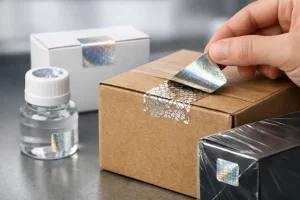
Then there is the question of permanence. Some labels must remain intact for the life of the product. Others need clean removability. Security applications may require destructible films, void features, holographic elements, or tamper-evident constructions.
Finally, line performance matters more than many buyers expect. A label that looks excellent on a sample sheet can still cause problems if it dispenses poorly at production speed. Consistent converting, liner quality, die-cut accuracy, and adhesive behavior all affect machine efficiency.
Common mistakes in label selection
One common mistake is choosing by price alone. A low-cost label that lifts, smears, or fails to scan can create far greater downstream cost than the initial savings suggest.
Another is underestimating the substrate. Containers made from HDPE, recycled corrugate, coated cartons, metal drums, and flexible pouches each interact differently with adhesives. Without proper testing, the risk shifts to operations.
A third mistake is separating branding from functionality. In many sectors, the same label must carry visual identity, legal content, barcodes, and handling information. If one requirement dominates the specification, the overall label may underperform.
This is why experienced manufacturers approach label development as an engineering task as much as a printing task. Kimoha, for example, serves sectors where labels support traceability, security, and high-volume application, so performance has to be designed into the construction from the start.
When a pressure sensitive label is the right choice
A pressure sensitive label is usually the right choice when you need reliable adhesion, strong print quality, flexible design options, and efficient application across commercial volumes. It is especially effective when the label has to do multiple jobs at once – identify, inform, protect, and present.
It is also a strong fit for businesses managing SKU complexity, regulated content, or distribution-heavy operations. In those environments, label consistency affects more than appearance. It affects scan rates, inventory accuracy, compliance confidence, and customer experience.
The better question is not whether pressure sensitive labels are widely used. They are. The better question is whether the label you specify is engineered for the surfaces, speeds, and risks your operation actually faces.
A pressure sensitive label may look simple on the roll, but in practice it is a performance component. When selected correctly, it supports packaging efficiency, product integrity, and operational control long after it leaves the press.