 Food
Food Dairy & Poultry
 Beverage
 Home Care
 Beauty & Personal Care
 Health Care & Pharma
 Transport & Logistics
 Automobile
 Aviation
 Retail
 Exhibitions & Events
 Metal
Metal Garment
 Office Supplies
 Consumer Electronics

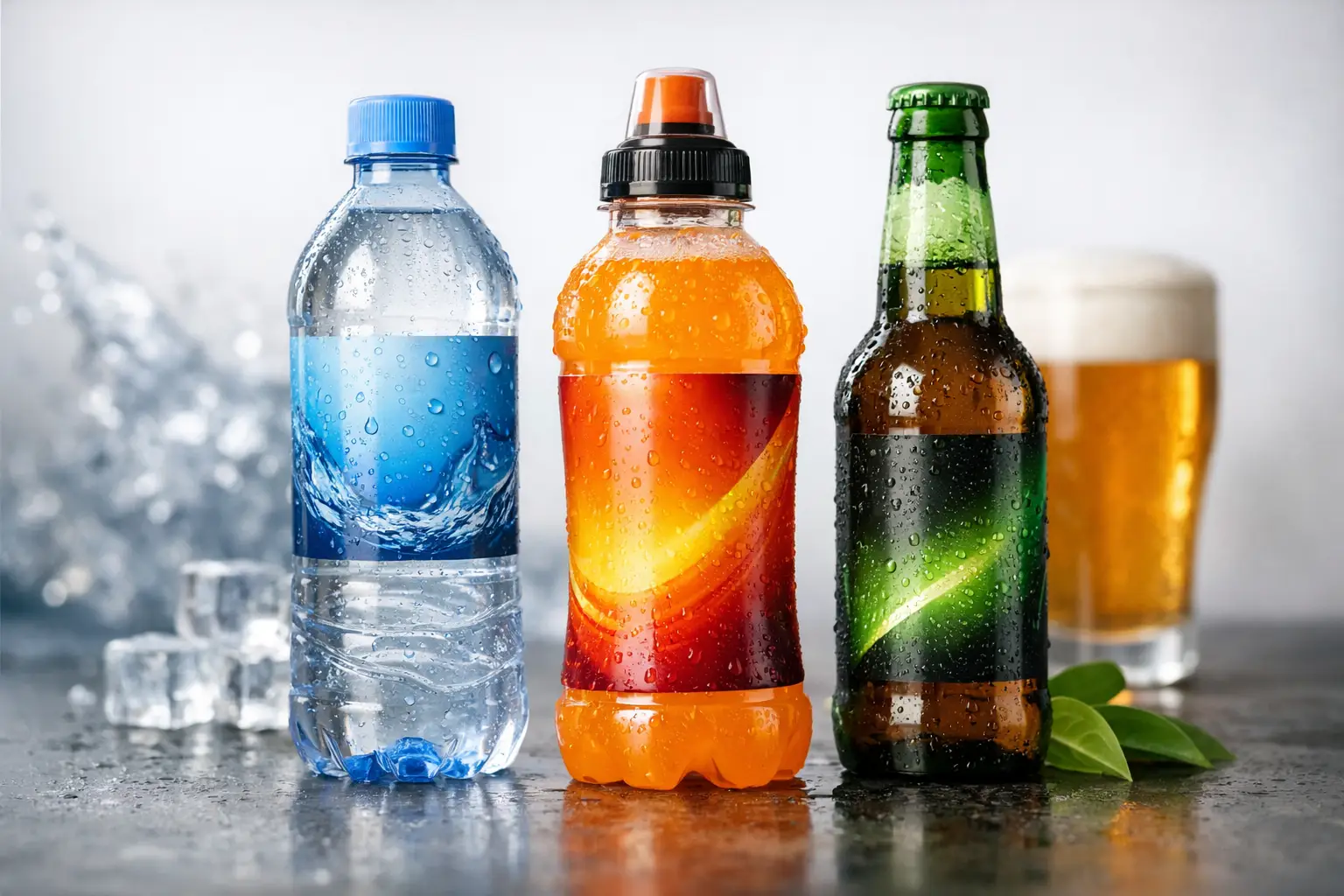
A beverage launch can lose momentum for reasons that have nothing to do with taste. The bottle looks ordinary on shelf, condensation softens the visual impact, or key compliance text competes with branding in a label panel that is simply too small. Beverage bottle shrink sleeves solve a very specific packaging problem – they turn the entire container into usable brand and information space while holding up under demanding production, logistics, and retail conditions.
For beverage manufacturers, that matters because packaging has to do more than look good. It has to run efficiently at line speed, remain legible through chilled distribution, support mandatory declarations, and fit a wide range of bottle geometries without compromising presentation. Shrink sleeves are often selected because they address all of those pressures at once, but only when the sleeve structure, film, print process, and application parameters are matched to the product and operating environment.
Why beverage bottle shrink sleeves are widely used
Traditional pressure-sensitive labels and wraparound labels still have a place in beverage packaging, especially where container geometry is simple and branding requirements are modest. Shrink sleeves become more attractive when the brand needs 360-degree decoration, a stronger visual block on shelf, or more room for product claims, nutrition data, usage instructions, multilingual content, and promotional design.
That expanded design area is one of the biggest commercial advantages. A sleeve conforms to the shape of the bottle rather than fighting it. On contoured water bottles, sports drinks, juices, dairy beverages, energy drinks, flavored milk, and functional drinks, that can create a cleaner branded appearance than a conventional front-and-back label setup.
The operational case is just as important. In cold-chain or condensation-heavy environments, surface exposure can challenge label performance and appearance. A well-manufactured shrink sleeve provides durable coverage and strong print presentation, even when bottles are handled repeatedly from filling line to retail cooler. For enterprises managing high-volume runs, that consistency is not a cosmetic detail. It directly affects shelf readiness, scan visibility, and brand perception.
Where shrink sleeves add value in beverage packaging
The strongest use case for beverage bottle shrink sleeves is full-body branding on bottles with limited panel space. This is common in categories where packaging shape is part of the product identity, such as premium water, nutraceutical beverages, dairy drinks, probiotic products, and seasonal or limited-edition launches.
They also add value when product portfolios are expanding quickly. Brands often need multiple SKUs, regional variants, language changes, and promotional updates without redesigning the bottle itself. In that environment, sleeves offer flexibility. The container can remain consistent while graphics, claims, and regulatory content are adapted through print and sleeve application.
Tamper evidence is another factor, depending on the pack format. A sleeve can be designed to extend over the cap and neck, creating a visible seal that supports consumer confidence and packaging integrity. This is particularly relevant in categories where hygiene perception, fill security, or product authenticity influences purchasing decisions.
Material and print decisions affect performance
Not all shrink sleeves behave the same way on a beverage line. Film selection has a direct impact on shrink behavior, print quality, application efficiency, and final appearance. PETG, PVC, OPS, and other film options each have strengths and limitations depending on the bottle shape, heat tunnel setup, recycling expectations, and decoration needs.
For highly contoured bottles, the sleeve must shrink uniformly without distorting critical graphics, barcodes, or statutory information. That requires precise pre-press planning and an understanding of distortion compensation. Artwork that looks correct on screen can deform badly after shrinking if the design has not been engineered around the bottle profile and shrink characteristics of the selected film.
Print technology matters just as much. Beverage brands typically need strong color reproduction, consistent registration, and reliable readability for fine text. In high-volume commercial environments, advanced flexographic and digital printing capabilities can support both scale and precision. Flexographic printing is often preferred for longer runs and stable SKU programs, while digital may support variable designs, shorter campaigns, or market testing with greater agility. The right choice depends on run length, artwork complexity, and change frequency.
Ink performance should not be treated as a minor specification. Bottles move through wet filling rooms, cold storage, transport, warehousing, and retail refrigeration. Sleeves need inks and print construction that resist scuffing, moisture exposure, and handling damage. If branding fades or fine copy loses clarity before the product is sold, the package has failed in both commercial and functional terms.
Beverage bottle shrink sleeves and production efficiency
A sleeve may look excellent in the mockup phase and still create problems on the line. This is where experienced manufacturing support becomes essential. Beverage bottle shrink sleeves must be developed with application conditions in mind, including line speed, mandrel sizing, cut accuracy, shrink tunnel temperature, steam or heat control, bottle wall thickness, and container stability.
If the sleeve application is poorly matched to the production environment, common issues appear quickly. These include wrinkling, smiling, distortion near the shoulder or base, weak seam integrity, trapped air, and misalignment over cap or neck features. Each one has a downstream cost in waste, rework, or reduced pack appearance.
Production teams also need to think about consistency across batches. Sleeve dimensions, seam quality, roll formation, and print repeat accuracy all influence machine performance. A technically competent label manufacturing partner will focus not just on artwork execution, but on repeatable converting quality that keeps application predictable over long production cycles.
For procurement and operations teams, that reliability matters more than isolated visual samples. The real measure is whether the sleeve runs efficiently over time, across different SKUs, and under normal manufacturing variability.
Compliance, readability, and brand control
Beverage packaging has become more information-dense. Ingredient declarations, nutrition facts, warning statements, recycling guidance, traceability markings, batch coding zones, and multilingual content can crowd traditional label formats. Shrink sleeves create more usable real estate, but more space does not automatically create better compliance.
The layout still needs discipline. Critical information must remain legible after shrink application, and barcode placement must account for curvature, distortion zones, and scanner readability. Decorative ambition should never compromise compliance performance. In regulated or export-oriented beverage categories, that balance is especially important.
Brand control is another reason sleeves are often selected. A full-body decorated bottle presents a more unified visual identity and can reduce the fragmented look that comes from separate labels, neck tags, and promotional stickers. For premium and crowded categories, that stronger brand block can influence shopper attention at the point of sale.
Trade-offs decision-makers should consider
Shrink sleeves are not automatically the right solution for every beverage brand. If the bottle is cylindrical, artwork requirements are simple, and speed with minimal decoration cost is the main objective, another label format may be more practical. Packaging decisions should follow operational fit, not trend adoption.
Recycling considerations may also influence material selection and design strategy. Sleeve coverage, film choice, and perforation or separation features can affect how easily the package moves through recycling systems. Brands with sustainability targets need to review these factors early rather than treating them as post-design adjustments.
There is also a practical trade-off between high-impact design and process tolerance. The more complex the bottle shape and graphics, the greater the need for technical control in pre-press, material selection, and line validation. That does not make shrink sleeves risky. It means they reward disciplined engineering.
Choosing a manufacturing partner for shrink sleeve programs
For enterprise buyers, the real question is not whether sleeves look impressive. It is whether the supplier can deliver precision-engineered performance at scale. That includes print consistency, distortion management, sleeve converting accuracy, dependable seam construction, and production support aligned with actual beverage line conditions.
A capable manufacturing partner should understand category-specific demands across water, dairy, juice, carbonated drinks, wellness beverages, and other fast-moving segments. They should be able to advise on artwork feasibility, material compatibility, application performance, and durability under real distribution conditions, not just provide generic print output.
This is where long-term industrial expertise becomes valuable. A manufacturer with mature production systems and a broad labeling background can help brands align shelf presentation with line efficiency, compliance, and supply chain reliability. For businesses managing commercial scale, that integration is what turns packaging from a design asset into an operational advantage.
When beverage bottle shrink sleeves are specified correctly, they do more than improve the package appearance. They create space for brand storytelling, support product integrity, and help the bottle perform as a complete commercial unit from filling line to consumer hand. The best results come from treating the sleeve not as decorative film, but as a technical packaging component that deserves the same precision as the product inside.