 Food
Food Dairy & Poultry
 Beverage
 Home Care
 Beauty & Personal Care
 Health Care & Pharma
 Transport & Logistics
 Automobile
 Aviation
 Retail
 Exhibitions & Events
 Metal
Metal Garment
 Office Supplies
 Consumer Electronics

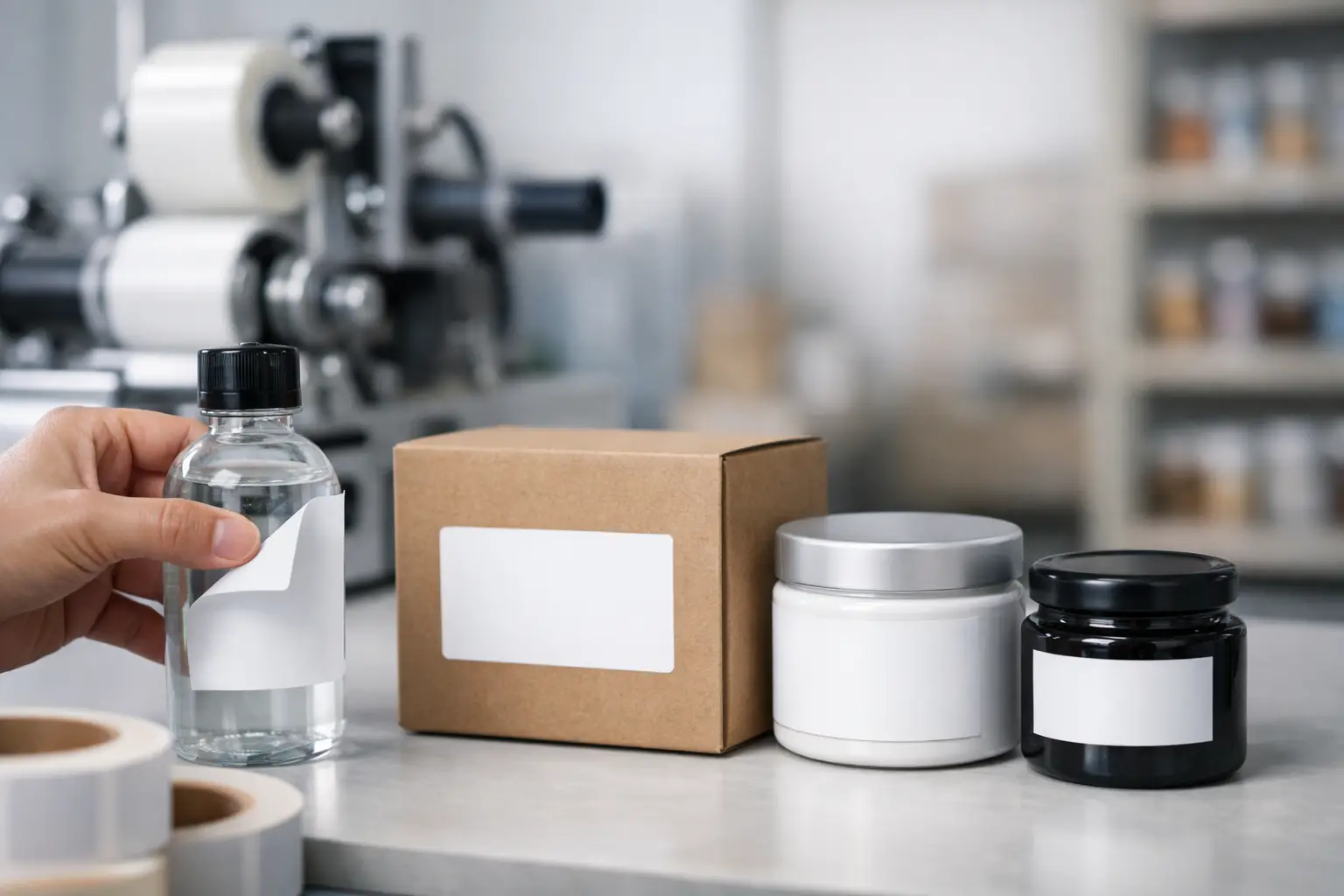
A label failure rarely looks dramatic at first. It might start as edge lift on a cold-fill bottle, a barcode that will not scan after warehouse handling, or a batch code that fades before the product reaches the shelf. For manufacturers and brand owners, that small failure can quickly affect traceability, compliance, presentation, and throughput. That is why self adhesive product labels are not just a packaging detail. They are a functional part of the product system.
In high-volume environments, labels carry more responsibility than many teams realize. They identify, inform, protect, authenticate, and support automated operations. When specified correctly, they help products move cleanly through production lines, distribution networks, retail environments, and regulated audits. When specified poorly, they create avoidable friction across operations, procurement, quality, and customer experience.
What self adhesive product labels actually do
Self adhesive product labels are pressure-sensitive constructions made to bond to a surface without water, heat activation, or separate glue application at the point of use. That sounds straightforward, but the performance depends on multiple engineered layers working together: the face material, adhesive, liner, print treatment, and finish.
For B2B buyers, the real value is operational. A well-built label must apply accurately at speed, remain bonded through the product’s life cycle, hold legible print, and support the brand image on the shelf or in transit. In some sectors, it must also resist chemicals, oils, moisture, abrasion, UV exposure, tampering, or temperature variation.
This is why the label cannot be treated as a generic commodity. A shampoo bottle, a pharmaceutical carton, a lubricant container, an aviation tag, and a frozen food pack may all use pressure-sensitive labeling, but their performance demands are not remotely the same.
Why material and adhesive selection matter
Most label problems are specification problems. The printed design may look right, but the construction may be wrong for the substrate or environment.
Paper labels can work well for many dry, short-life, and retail-facing applications where cost control and print quality are priorities. Filmic materials such as polypropylene or polyester are more suitable when durability matters – for example, in chemical containers, refrigerated packs, logistics handling, or products exposed to moisture and scuffing. The decision is not just aesthetic. It affects longevity, print stability, and machine performance.
Adhesive choice is equally critical. Permanent adhesives are used when the label must stay in place for the life of the product. Removable adhesives support temporary identification or repositioning. High-tack adhesives are often needed for rough, curved, or low-energy surfaces. Freezer-grade adhesives are designed for cold-chain conditions, while specialty constructions may be required for oily substrates, pharmaceutical packaging, or industrial drums.
There is always a trade-off. An aggressive adhesive may improve bond strength on difficult surfaces, but it can also complicate clean removal. A premium film may improve durability, but it may be unnecessary for a fast-moving dry goods application. The right choice depends on how the product is filled, stored, transported, handled, and displayed.
Self adhesive product labels in regulated and high-risk sectors
In regulated industries, the label is part of compliance infrastructure. It is not simply decoration. It may need to carry statutory declarations, safety symbols, dosage instructions, lot numbers, expiry dates, multilingual information, and machine-readable codes.
For pharmaceuticals, healthcare products, and certain food categories, print clarity and consistency are non-negotiable. Smudged variable data or poor adhesion can create audit exposure and product risk. In logistics-heavy operations, barcode readability matters just as much as visual quality because scanning failures slow movement, reduce inventory accuracy, and create reconciliation issues.
Security requirements raise the standard further. In markets where diversion, refilling, tampering, or counterfeiting are concerns, self adhesive labels can be built with tamper-evident features, destructible substrates, void patterns, holographic effects, and serialized tracking elements. The label then serves a dual role – product identification and brand protection.
That is especially relevant for sectors where authenticity and custody matter. Lubricants, electronics, personal care, pharma, and aviation-related applications often need labels that support both operational control and trust.
Print technology affects more than appearance
Procurement teams sometimes focus heavily on material and overlook print process capability. That can be a costly mistake because print technology affects readability, consistency, speed, and scalability.
Flexographic printing is well suited to high-volume runs where repeatability and production efficiency are priorities. Digital printing offers advantages for shorter runs, variable data, versioning, and faster changeovers. In many industrial environments, the best result comes from matching the print method to the application rather than forcing one process across every SKU.
Ink and finish selection also matter. A visually sharp label that scratches easily may fail in transport. A matte finish may improve premium shelf presence in one category, while a gloss finish may improve color vibrancy in another. Protective coatings and laminates can extend label life, but they should be specified with purpose. More protection is not always better if it adds complexity without solving a real use-case problem.
Application performance on the line
A label that looks excellent in samples can still fail during production. Applicator speed, dispensing angle, container shape, line pressure, and storage conditions all influence performance.
Curved containers, squeezable packaging, textured surfaces, and small-diameter applications require careful testing. So do products exposed to condensation or immediate chill after application. If labels are applied in a dusty plant, a humid room, or a high-speed packaging line, the construction has to accommodate those conditions.
This is where enterprise buyers benefit from a manufacturing partner that understands end use, not just print output. Label conversion must align with line efficiency. Roll direction, core size, label gap, release characteristics, and adhesive behavior all affect application uptime. A technically correct label reduces rework, rejects, and machine stoppages.
Branding, shelf impact, and operational discipline
For consumer-facing products, self adhesive product labels also carry a commercial burden. They influence first impression, category recognition, and perceived quality. On crowded shelves, the label often does the work of attracting attention before the pack format does.
But branding and technical performance should not be separated. A premium look means little if the label wrinkles on application or discolors in storage. The strongest packaging programs treat label development as a cross-functional decision between marketing, packaging, operations, and quality teams.
That is particularly true for businesses managing multiple SKUs, regional variants, regulatory versions, or promotional runs. Label systems need to support consistency at scale. Good artwork execution matters, but so does version control, print accuracy, and repeat manufacturing discipline.
How buyers should evaluate self adhesive product labels
The right evaluation process starts with the application, not the artwork. Buyers should ask what surface the label will bond to, what temperatures it will face, how long it must remain readable, whether it needs resistance to moisture or chemicals, and whether traceability or anti-tamper functionality is required.
They should also consider how the label will be dispensed and applied. Manual application and automated high-speed application can lead to different construction choices. Export-oriented products may require more durability due to longer transit cycles and handling variability across markets.
Sample approval alone is not enough. Real-world testing matters. Labels should be assessed on the actual substrate, with the real print content, under realistic storage and transport conditions. This is the stage where hidden issues surface – flagging, tunneling, adhesive ooze, poor scan performance, or finish damage.
An experienced manufacturer will usually guide that process with more rigor. Companies such as Kimoha operate at that intersection of print capability, material knowledge, and industrial application understanding, which is what enterprise buyers need when labels directly affect throughput and compliance.
Where long-term value really comes from
The strongest label programs are built around repeatability. It is one thing to produce an attractive label once. It is another to deliver the same performance across volumes, product lines, and changing operating conditions.
That is where manufacturing maturity matters. Consistent quality control, adhesive and substrate expertise, print precision, and application awareness all contribute to long-term stability. For large brands and industrial operators, that stability shows up in fewer line issues, cleaner audits, stronger shelf presentation, and more dependable product identification.
A good label should not demand attention after application. It should stay in place, stay readable, and keep supporting the product exactly as intended. That quiet reliability is what makes self adhesive labeling such a serious operational decision – and why the best results come from specifying for performance, not just appearance.
When teams treat the label as part of the product architecture, they usually make better packaging decisions from the start.