 Food
Food Dairy & Poultry
 Beverage
 Home Care
 Beauty & Personal Care
 Health Care & Pharma
 Transport & Logistics
 Automobile
 Aviation
 Retail
 Exhibitions & Events
 Metal
Metal Garment
 Office Supplies
 Consumer Electronics

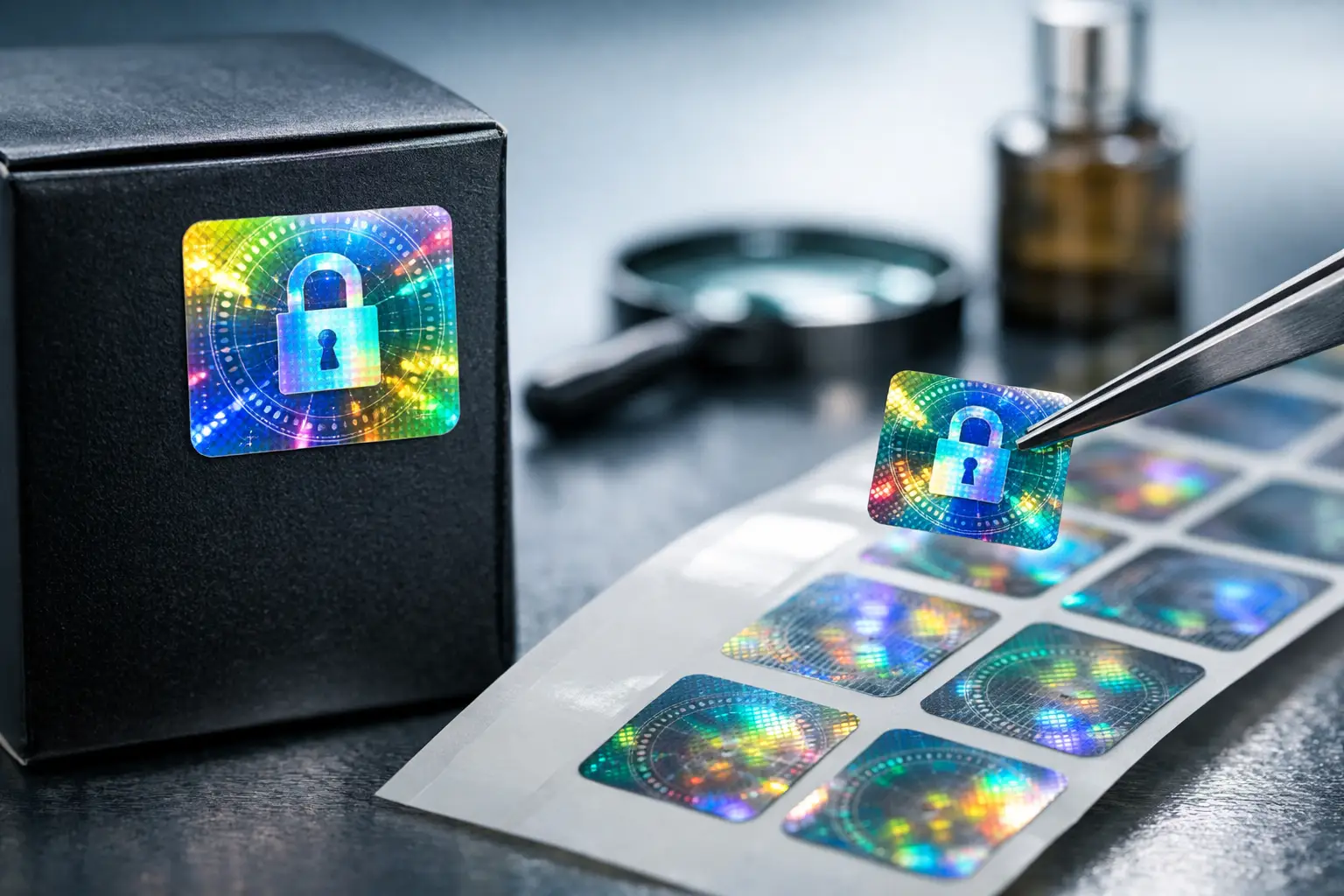
Counterfeit risk rarely starts with a dramatic failure. More often, it shows up as a customer complaint, a suspicious reseller batch, a warranty dispute, or stock moving through channels it was never meant to enter. That is where hologram labels for brand protection become practical, not promotional. They give brands a visible and difficult-to-replicate security layer that helps verify authenticity at the point of sale, during distribution, and across after-sales support.
For manufacturers and brand owners, the value is not limited to appearance. A properly engineered hologram label can support anti-counterfeit strategy, improve field-level inspection, and strengthen control over product movement. In high-volume sectors, that matters because the cost of fake or diverted goods is not just lost revenue. It affects compliance, customer trust, service claims, and channel relationships.
Why hologram labels for brand protection work
The main strength of a hologram label is immediate visual authentication. Unlike hidden security methods that require a scanner or app, holographic effects can be checked by distributors, retailers, service teams, and even end users in seconds. That speed matters in real operating environments where people need a practical way to separate legitimate stock from questionable material.
A well-designed hologram is also difficult to copy accurately. Counterfeiters can imitate basic graphics, but replicating specialized optical effects, micro features, and tamper-indicating construction is far more demanding. This does not mean holograms are a complete standalone answer. It means they create a meaningful barrier that raises the complexity and cost of imitation.
There is also a communication advantage. Security labels send a visible message that the brand takes authenticity seriously. On regulated, premium, and high-risk product lines, that visible deterrent can be useful before a counterfeit attempt even reaches the market.
What a security hologram label actually does
In industrial and commercial applications, hologram labels serve several jobs at once. First, they help verify genuine products. Second, they make tampering easier to detect when paired with destructible or void constructions. Third, they can support batch-level tracking when integrated with serial numbers, barcodes, or variable data printing.
That multi-function role is what makes them relevant to enterprise buyers. A label should not only look secure. It should fit packaging lines, adhesion requirements, storage conditions, and inspection workflows. A pharmaceutical pack, an electronics carton, a lubricant container, and an aviation component tag all face different handling environments. The right hologram solution depends on those practical conditions.
Visible security vs layered security
Some products only need a visible deterrent. Others need layered protection. Visible security includes holographic patterns, custom logos, and overt optical effects that can be recognized quickly. Layered security goes further and may include covert marks, serialized codes, tamper-evident facestocks, or integration with track-and-trace systems.
The trade-off is straightforward. Simple visible holograms are easier to deploy and inspect at scale, but they may be less resilient against organized counterfeit activity. Layered solutions offer better control, though they require stronger process discipline across packaging, warehousing, and channel verification.
Where hologram labels add the most value
Not every product category faces the same risk profile. Hologram labels are especially relevant where brand trust, warranty authenticity, regulatory confidence, or gray-market diversion are active concerns.
In pharmaceuticals and healthcare packaging, authentication is closely tied to patient safety and supply chain integrity. In FMCG and personal care, the concern is often fake products entering retail channels and damaging consumer confidence. In automotive components and lubricants, counterfeit goods can lead to performance failures and liability exposure. In electronics, batteries, and accessories, labels help distinguish genuine products from copied stock that may visually resemble original packaging.
They are also useful in logistics-intensive sectors where products pass through multiple intermediaries. The more touchpoints a product has between manufacturing and end use, the greater the need for quick, visual verification methods.
Design decisions that affect security performance
A hologram label is only as effective as its design and construction. Generic holographic foil provides shine, but brand protection requires more than visual appeal. Customization is critical. A label built with proprietary artwork, controlled repeat patterns, microtext, or specific optical structures is more difficult to duplicate than a stock holographic design.
Material selection also matters. The adhesive must hold across the intended substrate, whether that is paperboard, plastic, metal, glass, or coated packaging. If labels lift too easily or fail in transport, the security feature becomes unreliable. If the product is exposed to oil, moisture, temperature swings, abrasion, or handling stress, the facestock and print system need to match those conditions.
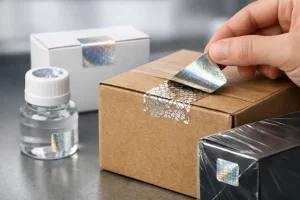
Tamper evidence is another key variable. In many applications, the best result comes from combining holographic authentication with destructible film or a void-release pattern. That way, an attempt to remove and reuse the label leaves visible damage. This is especially useful on cartons, seals, closures, warranty labels, and high-value packaged goods.
Serialization changes the conversation
When hologram labels are combined with unique serial numbers or variable data, they move from static security to traceable security. That gives brands the ability to investigate suspicious batches, support channel verification, and isolate leakage points more effectively.
This does add operational complexity. Serialized programs require print control, database discipline, and verification processes that fit production scale. But for businesses facing repeat counterfeit incidents or cross-border diversion, serialization can turn a label from a deterrent into a usable control point.
Common mistakes buyers make
One common mistake is treating holograms as a packaging decoration rather than a security system element. A label can look premium and still offer limited protection if the design is generic, easily sourced, or not linked to a verification process.
Another mistake is selecting a label without considering application conditions. A high-performance security label must survive real packaging lines, transport cycles, warehouse handling, and retail presentation. If the adhesive, release profile, or material gauge is wrong for the applicator or substrate, production teams inherit the problem.
There is also a tendency to over-engineer low-risk products or under-engineer high-risk ones. Not every SKU needs the same level of security. The right specification depends on product value, channel exposure, counterfeit history, and inspection capability in the field.
How to evaluate a hologram label supplier
For enterprise buyers, supplier choice is not just about print quality. It is about manufacturing control, repeatability, customization capability, and the ability to scale without compromising security consistency. A supplier should understand both the optical security element and the industrial labeling requirements around it.
That includes artwork control, substrate compatibility, adhesive performance, tamper-evident options, and production stability in volume runs. It also helps when the manufacturer understands regulated or technically demanding industries, because brand protection labels often need to work alongside compliance labeling, barcode systems, or multi-layer packaging requirements.
An experienced industrial label partner will ask the right questions early. What substrate is being labeled? Is the label hand-applied or machine-applied? Does it need to tear on removal? Will it face moisture, oil, or abrasion? Is field verification visual only, or does it include code-based validation? Those details shape the final result far more than artwork alone.
Hologram labels in a broader protection strategy
Hologram labels are strongest when they are part of a wider brand protection framework. That framework may include tamper-evident seals, void stickers, serialized labeling, packaging controls, distributor accountability, and clear authentication protocols.
This is where a manufacturing-led approach matters. Security cannot be separated from production reality. The label has to run efficiently, maintain consistency batch after batch, and support inspection across the supply chain. For brands with multiple SKUs, export packaging, or mixed channel distribution, standardization is just as important as the security feature itself.
Kimoha’s approach in this category reflects that industrial view. Security labels need to do more than look advanced. They need to perform reliably at scale, integrate with packaging operations, and support the commercial objective of protecting genuine product movement.
Choosing the right level of protection
The right hologram program depends on the threat level and the operational environment. For some brands, a custom overt hologram with tamper evidence is the practical answer. For others, especially those dealing with repeated duplication or complex distribution networks, it makes sense to build a layered label with covert elements and serialized control.
What matters most is fit. A security label should match the product, the channel, and the verification behavior of the people who will actually use it. When that alignment is right, hologram labels become more than a packaging feature. They become a working control point in the fight against counterfeiting, diversion, and avoidable loss.
If your brand is seeing more channel complexity, more warranty disputes, or more pressure to prove product authenticity, this is usually the right moment to review how visible security is working on the pack itself.